
Diary of a Bridge: part 6. The Bridges Academy
15/10/26
There is a part of the year where summer’s full heat gives way to a milder version of itself, where children return to school and adult minds return to work. This routine was broken this year with another Bridges adventure, taking me out of Italy, out of my comfort zone, and into the Slovenian countryside.
I depart Bologna on September 2nd and drive the familiar route through Padova, Venezia and Trieste, across the Slovenian border (with its now practically vestigial border control station) and back into Lubiana.
I stay with Juš in Črna Vas, in a recently renovated house surrounded by wetlands and farmlands; old, decrepit farmhouses crumbling under mounds of ivy flanked by modern, industrial farms and recently renovated residential complexes in shades of grey.
On the weekend I run the length of the Iška river, a tributary of the Ljubljanica, home to many species of waterfowl and some little trout that rush to hide as soon as I peek over the surface of the river.

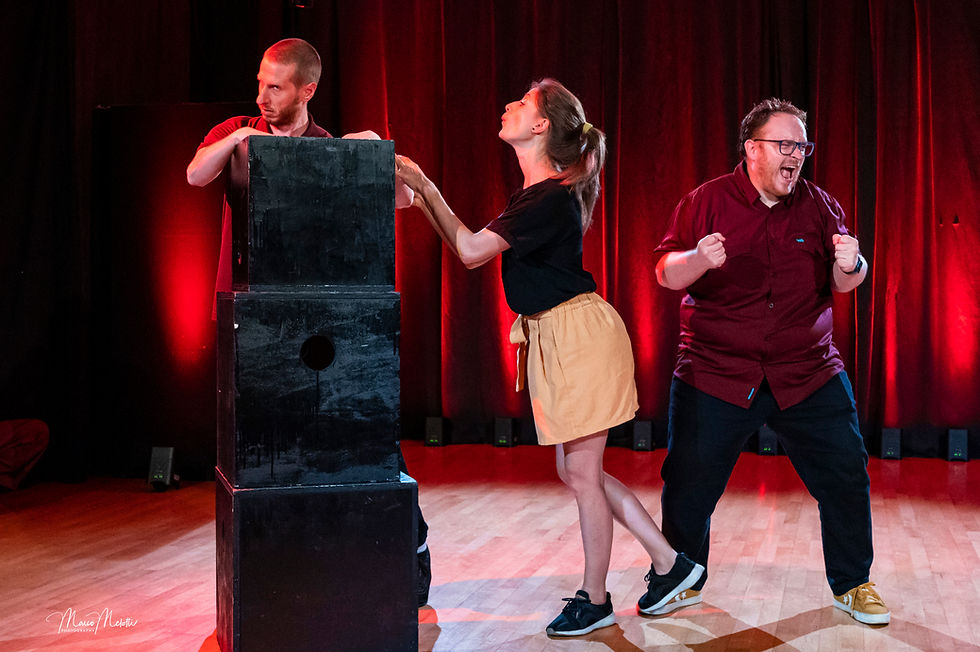
The next day we depart for Lendava, on the Slovenian-Hungarian border, where we will perform out first Bridges show of this tour. We get set up at Lendava cultural center, a strikingly beautiful building designed by renowned architect Imre Makovecz that incorporates elements of traditional small-town architecture and elements of birds in flight. The stage is gigantic and makes us feel a bit overwhelmed. After the tech rehearsal, I take a walk through Lendava and its majestic plane trees, up to its medieval castle, which was a school until the mid-twentieth century. A frog hops across the stone stairs as I ascend. There is a warm, soft summer wind. Locals populate the sparse bars of Lendava city center, speaking softly in front of a couple beers.
The next day is epic: we have two shows at the two opposite ends of Slovenia.
We play in the morning in Lendava for some high school students, which we find very well-mannered and (mostly) engaged, then we hop in the car and drive to Nova Gorica, on the Slovenian-Italian border. I enjoy weaving in and out of Italy, watching the street signs change font and language as we drive through Gorizia-Nova Gorica. Janez, our friendly technician, meets us a Mostovna, an old elevator-parts factory turned concert venue. We love the place, the vibe, the warm welcome. The audience is not huge but very warm and happy to participate.

That evening, we drive back to Ljubljana, with Cassiopeia peeking through the rear window of the car.
Then, Sunday night, the beginning of a new chapter. We drive to the Slovenian-Austrian border this time, to Tinje/Tainach, where a Slovenian minority has been living for centuries. We cross the border at the Loibl Pass (1368 m), an important crossing for many centuries, now another empty border crossing. Monuments to the laborers who built this road and the victims of a nearby concentration camp remind us of this area’s complicated history.
We stay in a renovated Catholic monastery next to the Church of the Assumption of Mary, which has its own graveyard and attached monastery. It was first documented in 1135 and the inscriptions in the church are in Slovenian. It was originally dedicated to the Christian martyr St. Valentine, from where the names Tinje and Tainach come from.
We are surrounded by the symbols and iconography of Catholicism, which make it feel sort of like Italy.

I learn from Wikipedia that “Tainach is the center of one of the most important Slovenian, and today intercultural, Catholic educational institutions in the Jaun Valley: the Catholic Education Center (Katoliški dom prosvete Sodalitas). Its origins date back to the interwar period, when, in the wake of the border dispute of 1918/1920 , a portion of the Slovenian intelligentsia left the country, while at the same time the Slovenian tradition of popular education was revived. [...] The choice of location can also be explained by the fact that Tainach and its surrounding area were still largely Slovenian-speaking at that time and were able to directly serve the northern Jaun Valley as well as the Klagenfurt Plain. The first retreat courses were held in the provost's residence in Tainach/Tinje in 1929. [...] In 1954 the Rural Education Center was founded, initially offering agricultural courses for young farmers during the winter months. [Later], the Sodalitas priestly community built its own retreat and education center next to the provost's residence, which opened in 1961.”
It is so inspiring to be in a place with such a strong connection to the land and such an old tradition of education. You can feel it there, it is a positive, welcoming place, a place of learning and exchange between generations. A tradition that we will gladly take up for a week!

One car at a time, the Bridges Academy participants begin to arrive. Months and months of work begin to take shape concretely. IGLU’s organization is impeccable and the Bildungshaus staff quite welcoming. The objective for the Academy was to pass on the Bridges method to a group of motivated younger artists, in the hope that some would continue the work and new international collaborations would form. We did indeed succeed in putting together a talented, diverse, motivated group of artists; for me, it was totally thrilling to see people from completely different backgrounds and cultures networking, exchanging ideas, and growing together.

The last two shows we perform are at Tinje and in Ljubljana, at Pionirski theatre, This segment of the Bridges project has been a very important one for me, because it happened in places where I mostly did not understand the local language (contrarily to when we played in France or Italy, for example, where I had a clear advantage). Though this of course meant more moments of confusion and feeling left out of certain moments, it also meant not having responsibility for the story, totally letting go of control over meaning and just playing. If language often implies control over communication or meanings, letting go of that is the ultimate liberation, a surrendering to the artistic process.
--Ollie Rasini


Comments